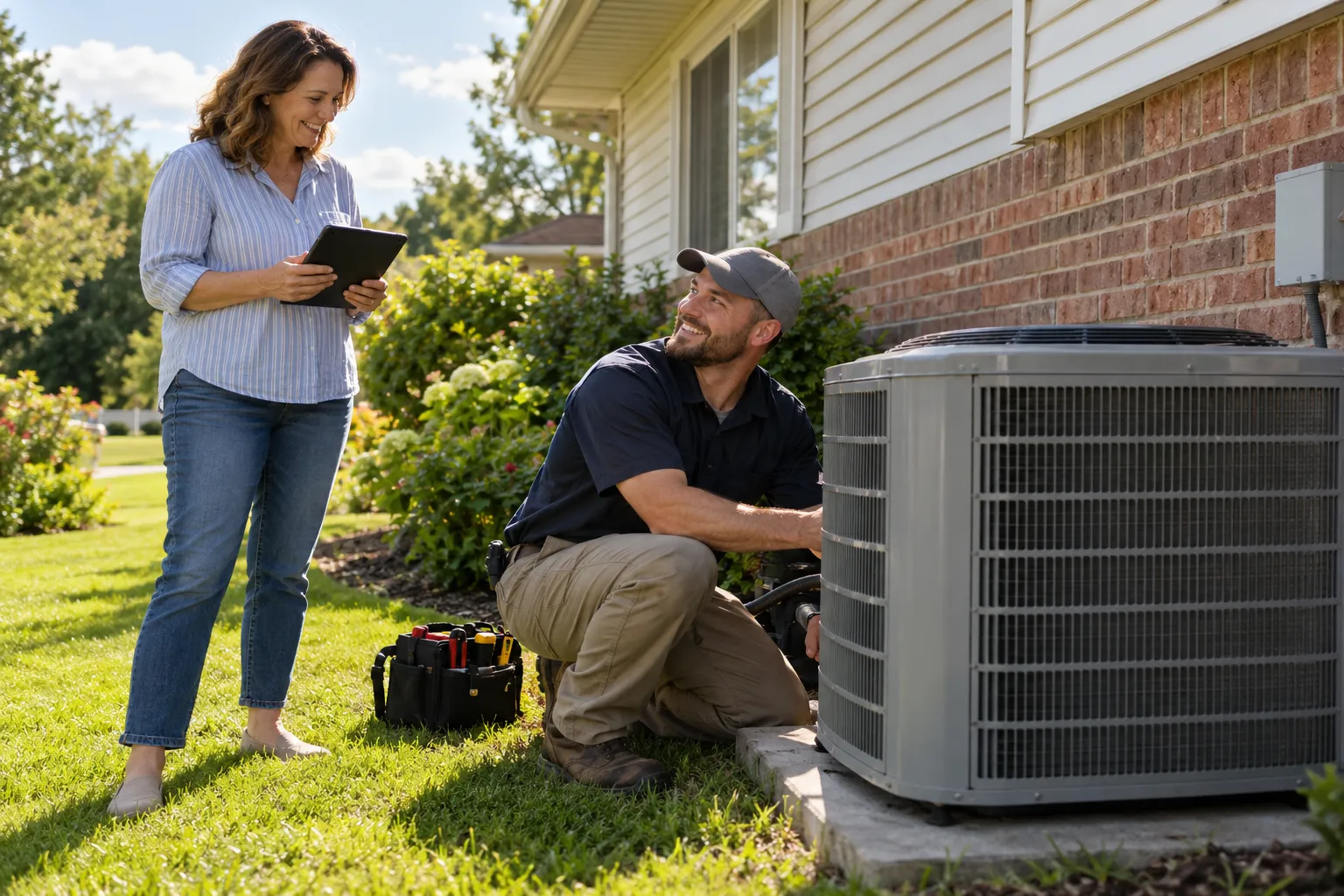
A warm house is hard to ignore. Maybe the air from your vents feels weak, the unit hums but never starts, or the thermostat will not budge. This page gives you a short checklist to follow first, then explains what a repair visit looks like and what common fixes involve.
Engineeranime Heating & Air is a referral service. It does not repair, install, or send out its own crews. You tell us the problem, and we connect you with an independent HVAC provider in our network that serves the Frisco area. The provider diagnoses the fault, gives you a written quote, and does the work. Referral, not repair. You decide whether to accept the quote.
AC Stopped Cooling? Check, Note, Call
Your house is getting warm. Work through this list in order. It takes a few minutes, and it may save you a service visit.
First: Five Quick Checks
- Set the thermostat to cool, about five degrees below the room temperature.
- Look at the breaker panel for a tripped AC breaker.
- Check the air filter. A clogged one can choke airflow.
- Make sure the outdoor unit is not buried in leaves or debris.
- Look for ice on the copper line or a full drain pan.
If a breaker trips again after one reset, stop. Do not keep flipping it.
Next: Write Down What You See
Note the sounds, smells, and the thermostat reading. Note when the trouble started. Check whether the outdoor fan is spinning. These details help a provider plan the visit and bring the right parts.
Then: Reach a Provider
Request a callback to check provider availability. You can also send the request form. If it feels like an emergency, say so. Emergency AC repair is a common request in a hot, humid summer, and many providers can respond quickly. Availability depends on the provider and the day.
Referral, Not Repair
Who Does What
- Engineeranime Heating & Air: listens to your problem and routes your request.
- The provider: an independent local HVAC business. It diagnoses, prices, and repairs, and it stands behind its own work.
- You: review the written quote and decide.
Your request goes to a provider in our network that covers your area. Call hours vary by provider. Providers set their own prices, schedules, and terms. Engineeranime Heating & Air does not do the work and does not set the price.
What Happens as the Hours Pass
Timing changes the outcome. Here is the usual pattern during a long, humid summer.
The First Hours
The indoor air warms up and humidity climbs. Hot attics push heat down through the ceiling fast. If you see ice on the unit, turn it off and let it thaw. Running a frozen coil can strain the compressor.
The First Day
The home feels sticky. Moisture can settle on walls and in closets. Sleep gets harder. Children, older adults, and pets feel the heat first. If anyone feels dizzy or unwell, move to a cooler place and get help.
The Following Days
Warm, damp air gives mold a chance to start. A weak part, such as a worn capacitor, can put extra load on the compressor. A small repair can turn into a larger one. Storm season adds another risk, because power surges can harm AC parts.
Signs Your AC Needs Repair
- Air from the vents is warm or weak.
- The system runs, but the house never reaches the set temperature.
- You hear grinding, squealing, buzzing, or clicking.
- Water pools near the indoor unit.
- You smell something musty or burnt.
- The unit starts and stops in short bursts.
- Your power bill climbs with no change in habits.
A burning smell or sparks is a stop sign. Turn the system off at the thermostat and the breaker, then call a provider.
Common AC Repairs
Electrical Parts
Capacitors, contactors, and relays wear out in heat. A worn capacitor is a common reason an outdoor unit hums but will not start. These are often smaller repairs.
Refrigerant and Coils
Low refrigerant usually points to a leak. Adding more without finding the leak is only a short-term patch. Dirty or frozen coils also block cooling.
Drainage and Airflow
Humid weather feeds algae in drain lines. A clogged line can shut the system off or leak into a ceiling or closet. Weak blower motors and dirty filters cut airflow.
What a Repair Visit Looks Like
1. The provider asks about the symptoms you noted. 2. They check the thermostat, power, filter, and both units. 3. They test parts and refrigerant pressures. 4. They explain the cause and give a written quote. 5. They start the repair only after you approve.
Ask the provider to show you the failed part. It helps you understand what you are paying for.
Repair or Replace?
A repair usually makes sense when the system is fairly young and the fault is clear. Replacement deserves a look when:
- The unit is more than 12 to 15 years old.
- Repairs keep coming back.
- The quote is a large share of the cost of a new system.
- The system uses older refrigerant that is getting harder to find.
Ask the provider for both options in writing, so you can compare them calmly.
Questions to Ask the Provider
- Is there a diagnostic fee, and does it apply toward the repair?
- Can I get the quote in writing before work starts?
- What warranty covers the parts and the labor?
- Are you licensed to work in my state?
- Can you help document damage if I need to file a claim?
Some policies may cover sudden damage, so check your policy. Providers can often help document damage for a claim.
What's Included
Fault Diagnosis
The provider tests the thermostat, power, filter, and both units to find the real cause.
Written Quote
You get the price in writing before work begins, so you can decide.
Common Part Repairs
Capacitors, contactors, fan motors, and drain lines are handled by the provider.
Cooling Performance Check
After the fix, the provider checks airflow and temperature drop to confirm the system cools.
Typical AC Repair Costs
These are typical U.S. ranges for common AC repairs. Your price depends on the part, the age of the unit, and the provider. Always get a written quote before you approve any work.
| Repair item | Typical range | Notes |
|---|---|---|
| Diagnostic visit | $75 – $200 | Some providers apply it to the repair |
| Capacitor or contactor | $120 – $450 | Common heat-related wear |
| Condenser fan motor | $400 – $900 | Outdoor unit fan problem |
| Drain line clearing | $75 – $300 | Often linked to algae buildup |
| Refrigerant leak repair and recharge | $200 – $1,500 | Varies with leak location and refrigerant type |
| Compressor or coil replacement | $1,200 – $3,500 | Larger repair; compare against replacement |
How It Works
Run the Checks
Check the thermostat, breaker, filter, and outdoor unit, then write down any sounds, smells, or ice.
Contact Engineeranime Heating & Air
Request a callback to check availability, or send the request form with your notes.
Get Matched
We connect you with an independent local HVAC provider in our network.
Review the Quote
The provider explains the fault and gives a written price. You approve it or decline.
Why Call Engineeranime Heating & Air
Plain Referral
We tell you up front that providers do the work. We listen, then connect you with a local one.
Clear Roles
You know who does what: we route, the provider repairs, and you decide.
Local Providers
Requests go to independent providers in our network that serve your part of the area.
No Obligation
Asking for an estimate does not commit you to hire anyone.
Other Services
Need ac repair in Frisco?
Tell us what your system is doing. Request an estimate and a local provider in our network will follow up with next steps and a written quote.
No obligationAC Repair FAQ
Why is my AC running but not cooling the house?
Common causes include a clogged filter, a frozen coil, low refrigerant, or a failed outdoor part. Try the quick checks first. If the air is still warm, a provider can diagnose the cause.
Is it safe to keep running an AC that is freezing up?
No. Ice on the coil or line means airflow or refrigerant is off. Turn the system off and let it thaw. Running it frozen can strain the compressor and raise repair costs.
Does Engineeranime Heating & Air send technicians to repair my AC?
No. Engineeranime Heating & Air is a referral service. We listen to the problem and connect you with an independent local HVAC provider. That provider does the diagnosis, the repair, and the pricing.
Request a callback
Tell us what your system is doing. Request an estimate and a local provider in our network will follow up with next steps and a written quote.
No obligation